Remember the days of rushing home to catch your favorite TV show, programming your VCR, or missing the opening minutes of a movie? These frantic media moments have vanished, replaced by the simple convenience of Video on Demand (VOD) – a technology that has transformed modern entertainment consumption.
VOD delivers an entire media universe directly to devices. Subscribers can access preferred content—movies, TV shows, documentaries – whenever necessary. The chosen video plays instantly on phones, tablets, or smart TVs from popular platforms like Netflix, Disney+, and HBO Max.
The experience offers complete control. Viewers can start content at any point, pause it when the doorbell rings, rewind to catch that crucial dialogue, speed up or slow down playback, etc. These features, known as “trick modes,” have become fundamental to contemporary viewing habits. To enjoy the benefits of VОD, it is enough to have a high-speed connection to the server that implements this service.
Top 3 VOD Business Models
Before implementing anything in your business, make sure it will generate revenue. And VOD is no exception. Implementing video-on-demand services requires a strategic approach to revenue generation.
The industry has established several distinct monetization frameworks, each designed for specific market applications. These models are often combined, offering users options like AVOD + TVOD or AVOD + SVOD, among others. Let’s examine the three dominant approaches that drive today’s streaming economy.
Transactional-VOD (TVOD)
The concept of PPV (Pay-per-view) is sometimes applied to this model. As the name suggests, the idea is that users only pay for what they watch. For example, they can buy access to an exclusive video or a movie premiere. This la carte approach offers flexibility for both occasional viewers and content providers.
The TVOD framework branches into two distinct categories:
Electronic Sell-Through (EST) – Provides permanent ownership of content purchased through digital channels. Also known as Download to Own (DTO), this option allows viewers to download content to personal devices for unlimited future viewing.
Download to Rent (DTR) – Offers temporary access to content for a defined period (typically 24-72 hours) at a lower price point than EST options.
Market leaders Apple TV, Google Play, and Amazon Prime Video have successfully implemented TVOD strategies, particularly for new movie releases and premium events. Their success stems from established payment infrastructures, massive distribution channels, and diversified content portfolios. Recurring Payment Model (SVOD).
Subscription-VOD (SVOD)
Subscription-based streaming services deliver unlimited content access for fixed periodic payments (most often monthly). This model, pioneered by Netflix and adopted by Disney+, HBO Max, and others, creates predictable revenue streams and encourages regular engagement.
SVOD is a successful business model, which is confirmed by global experience. People are ready to regularly pay relatively little money for the opportunity to access a database of high-quality and versatile content. ROI is possible, but apparently only if you manage to invest in the market leader.
Advertising-VOD (AVOD)
Advertising-supported Video on Demand (AVOD) is a type of VOD where the viewer can watch a movie, series, or TV show for free with ad breaks. This type of monetization is well-known to YouTube platform users. Advertisers pay content creators to place ads on their videos based on the size of the audience watching them. AVOD platforms are getting their fair share as well.
Why Is VOD Important in 2025?
In 2025, video is still the most in-demand form of information. This can be concluded from how popular video-on-demand platforms like YouTube or Netflix are. Viewers like to be able to access the content they want anytime, anywhere. And video creators appreciate the ability to deliver their content straight to the audience.
Statista predicts video-on-demand revenues to reach $230.9 billion in 2027. Moreover, by the end of 2025, more than 92% of all consumer Internet traffic will come from online video. It’s no wonder why many companies decide to incorporate video-on-demand or live streaming into their business strategy.
A VOD Timeline: How it Changed Over the Years
Once upon a time, TV was the only place where we could watch our favorite movies or shows. The introduction of video-on-demand has revolutionized the entertainment industry. The ability to choose what and when to watch has supplanted broadcast TV and Video CDs/DVDs, becoming the number one choice for almost everyone.
Initially, VOD streaming was not very affordable, since HTTP technology was used to implement it. However, after the emergence of YouTube in 2005 and the invention of technologies such as video compression, HLS, and adaptive bitrate streaming, video-on-demand has seen more users.
2016 was also a major milestone for the video streaming industry. The launch of Netflix and Amazon Prime has changed the viewing habits of many people in favor of video on demand. So, for example, 160 million Indian consumers alone have joined the VOD audience.
But not only the emergence of new technologies and video platforms have contributed to the scope of the adoption of the VOD service. COVID-19 lockdowns dramatically accelerated existing trends toward digital entertainment. With traditional entertainment venues closed, consumers flocked to streaming platforms in unprecedented numbers.
Market valuation reflected this explosive growth: from $60 billion in 2020 to $81 billion in 2021, and $94.88 billion by the end of 2022. This trajectory continued, with the global VOD streaming market reaching a staggering $159.4 billion by 2023, according to recent industry reports, and is expected to grow to US$230.9 billion in 2027.
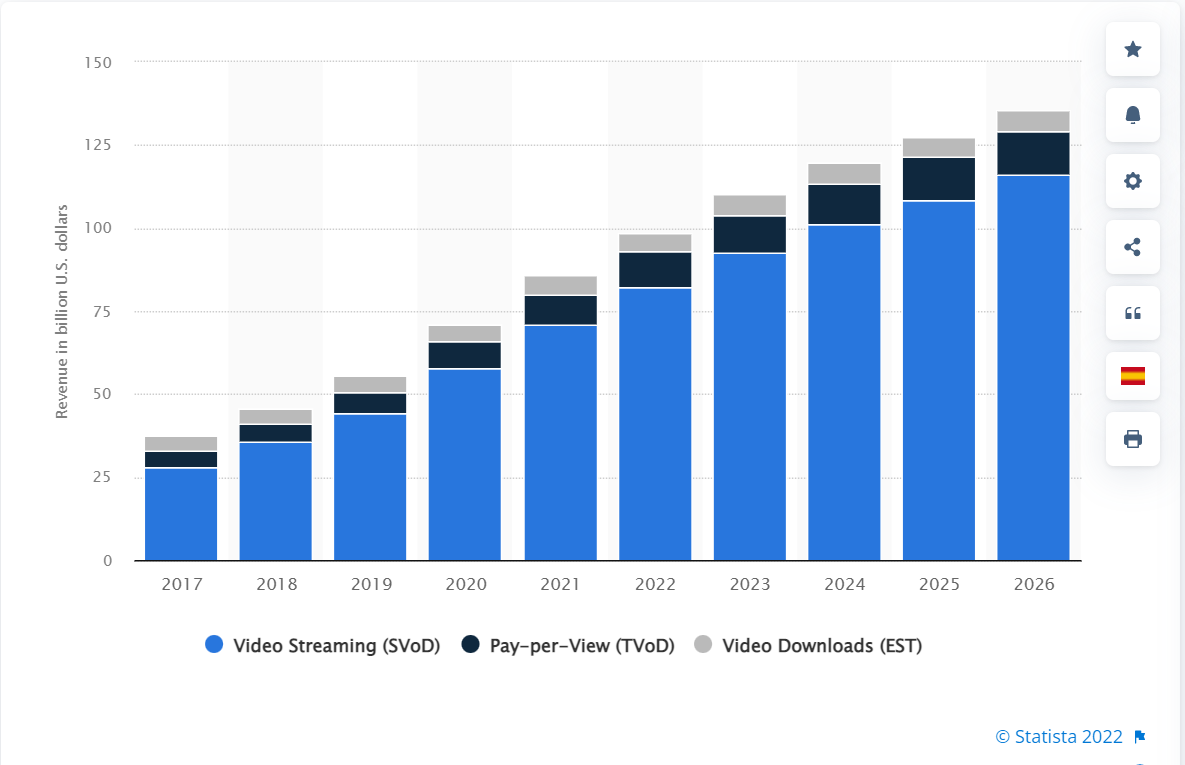
The U.S. market shows signs of saturation, with 95% of households subscribing to at least one streaming service as of Q3 2024. This has shifted competitive focus to international markets and innovation in content offerings.
The VOD market has witnessed significant diversification in monetization approaches. While subscription models dominated early growth, 2024-2025 has seen major platforms embracing hybrid models:
- Netflix, Disney+, and Max all launched ad-supported tiers
- Amazon Prime Video integrated advertisements into its base subscription in early 2024
- Apple TV+ emerged as the fastest-growing major SVOD service in Q1 2024
Regional services have gained traction by focusing on specialized content, particularly sports and reality programming. Movistar+ (Spain), Joyn Plus+ (Germany), and Kayo (Australia) achieved record subscription growth in 2024 through targeted local content strategies.
The most significant trend of 2025 has been the proliferation of bundling arrangements, with streaming services increasingly partnering to offer combined subscriptions at discounted rates. This consolidation trend suggests the industry is moving toward an ecosystem of “mega-bundles” that ironically resemble the cable packages they originally sought to replace—albeit with greater flexibility and personalization options.
As we move deeper into 2025, the lines between different VOD business models continue to blur, with the most successful platforms offering consumers multiple entry points based on budget and viewing preferences.
VOD vs Live Streaming?
In today’s streaming landscape, video delivery comes in two main formats: VOD, which lets viewers watch on their schedule, and live streaming, which happens in real-time. Each format serves different needs and creates distinct experiences for audiences.
Since 2023, businesses have increasingly combined both approaches. Understanding when to use each format has become essential for content creators looking to maximize engagement.
What Is Live Streaming?
Live streaming is the process of delivering video and audio content from a provider to users in real-time. This type of media distribution is similar to how TV viewers receive continuous broadcasts in a digital or analog format. By 2025, live streaming has become essential for a wide range of events, from major sporting events and concerts to corporate announcements and personal video diaries.
How is Live Streaming Different From VOD?
The biggest difference between Live Streaming and VOD is how and when the content reaches the audience. In live streaming, the action is captured and streamed in real time, meaning the audience is part of the live event wherever they are. In the case of VOD, the video content that reaches viewers has been pre-recorded, edited and pre-uploaded, so there is no sense of “here and now” while watching. If you are considering which content delivery method to choose, VOD or live streaming for your business, comparing the following factors will help you in your decision.
Quality
In terms of quality, pre-recorded and edited VOD videos outperforms live streams that are literally created and distributed in real time and cannot be modified. Even giants like YouTube and Twitch have a hard time streaming live at high resolutions. And they still cannot provide reliable and smooth 4k live video transmission.
Control
VOD production offers precise content control. Creators can reshoot scenes, edit out mistakes, add professional effects, and review the final product before publication.
Streamers do not have this privilege, as their viewers are watching the raw video with all the possible flaws that were made live. On the other hand, viewers value the “unfiltered” nature of live content, as well as the likelihood that something might go wrong on air that they will witness.
Convenience and Accessibility
Perhaps one of the biggest advantages of video on demand is that it can be watched at any time. Viewers don’t have to adjust their time to the start of their favorite show. They can watch the content they want at their convenience.
In the case of live streams, viewers must be available at the exact time the video is broadcast, which makes them a bit less convenient than VOD. However, the integration of “DVR-style” replay features on most major platforms has reduced this limitation, with 83% of major streaming events now offering immediate replay options.
Audience Engagement
Because VOD is a pre-recorded and uploaded product, viewers cannot interact with the creator or each other while watching the content. So if you’re looking for interactivity, live streaming is your option. Since all the action istin reatime, viewers can chat, comment on what is happening, and ask the streamer questions. This incredibly unites the audience and positively influences customer retention.
As we’ve seen, each delivery method offers distinct advantages depending on content type, business objectives, and audience preferences. Most successful digital media strategies now incorporate elements of both approaches to maximize reach and engagement across different user segments.
How Live Streaming and VOD can Work Together for Your Business
The success of live streaming and VOD services lies in the fact that they are built on people’s natural needs for entertainment and the desire to consume information visually. And any business honed for success should also benefit from these technologies.
What is a vod platform? Companies use VOD platforms and live streaming platforms as a marketing tool for hosting live events, promoting new products, generating leads, building brand awareness, and informing audiences about a service or product.
Uploading your content and ideas about your industry to the VOD platform will definitely bring in more customers or viewers. It works if only because it’s convenient and anyone can access the video anywhere and anytime. Here are some industry trends that reflect the true value of on-demand video content:
- 91% of companies now include video content in their marketing strategies;
- 96% of consumers turn to videos to learn more about products or services before making purchasing decisions;
- 87% of marketers report that video content has directly increased sales;
- companies using both live and VOD formats report 2.4x higher conversion rates than those using static content alone.
Both live streaming and VOD have their own strengths and have a positive effect on business growth. Therefore, it is best to integrate both technologies in your strategy, offering your customers several options for content consumption.
The Future of VOD
Video on demand fits perfectly into the modern lifestyle. In 2022, the audience needs to have control over the content they consume, the ability to choose what and when to watch. A state-of-the-art VOD technology gives it all.
While no one knows exactly what the VOD industry will look like in the future, one thing is certain: more and more viewers will unplug the cable and switch to a new, more convenient format. The streaming business is expected to expand and diversify in the near future. The projected market value for the next year is over $90 billion, and judging by the rapid growth of the past years, this is more than realistic.
4 Ways an Independent VOD Platform Can Transform Your Business
Some may wonder why invest in your video-on-demand platform when YouTube and other free hosting services exist. The answer is: that relying on third-party platforms comes with significant limitations that can hamper your business growth:
Restricted monetization options that cap your revenue potentialA lot of startups, schools and organizations are implementing streaming technologies and seeing results. Technology will evolve and more companies will use it to advance their business.
- Content restrictions and algorithm changes beyond your control
- Limited brand customization that weakens your market position
- Lack of seamless integration with your existing business systems
- No direct API access for custom functionality development
Consider how these limitations might be holding your business back. Using consumer-grade platforms can diminish your company’s professional image and credibility with your target audience.
In contrast, a professional VOD platform that you control offers reliability and customization that aligns perfectly with your brand standards.
With the right approach and choosing the best VOD software, your business will undergo the following positive changes:
- Enhancing brand awareness
A dedicated VOD platform showcases your content under your brand identity, significantly increasing your company’s authority and creating meaningful differentiation from competitors.
- Exploring new sources of income
Video-on-demand content is not only a way to increase brand awareness but is also a product in its own right capable of generating a respectable income. Existing platforms have several earning models, we have already covered the main three: TVOD, AVOD, and SVOD. Professional video-on-demand hosting provides more opportunities to make money. Their revenue scaling models allow you to start earning in the shortest possible time, even if the audience is initially small.
- Increasing your conversion rate
An informative and visually pleasing video can enhance the appeal of your company’s main service or product. If your content provides relevant and useful information in a clear and engaging way, there’s a good chance that your viewers may also become your customers. In addition, high-quality video content can build a loyal community centered around your brand.
- Providing 24/7 and worldwide coverage
Video-on-demand streaming delivers your message 24/7, globally. Your content works continuously—engaging prospects, building relationships, and generating revenue—even while you sleep. This automated, always-on marketing creates a perpetual sales channel that never takes a break.
OTT Video Streaming Apps
It’s hard to discuss VOD without mentioning OTT (over-the-top). The two often go hand in hand; some even consider them interchangeable. However, this is not entirely correct. While both deliver video content, VOD can be transmitted via Internet and satellite infrastructure, whereas OTT exclusively utilizes Internet connections.
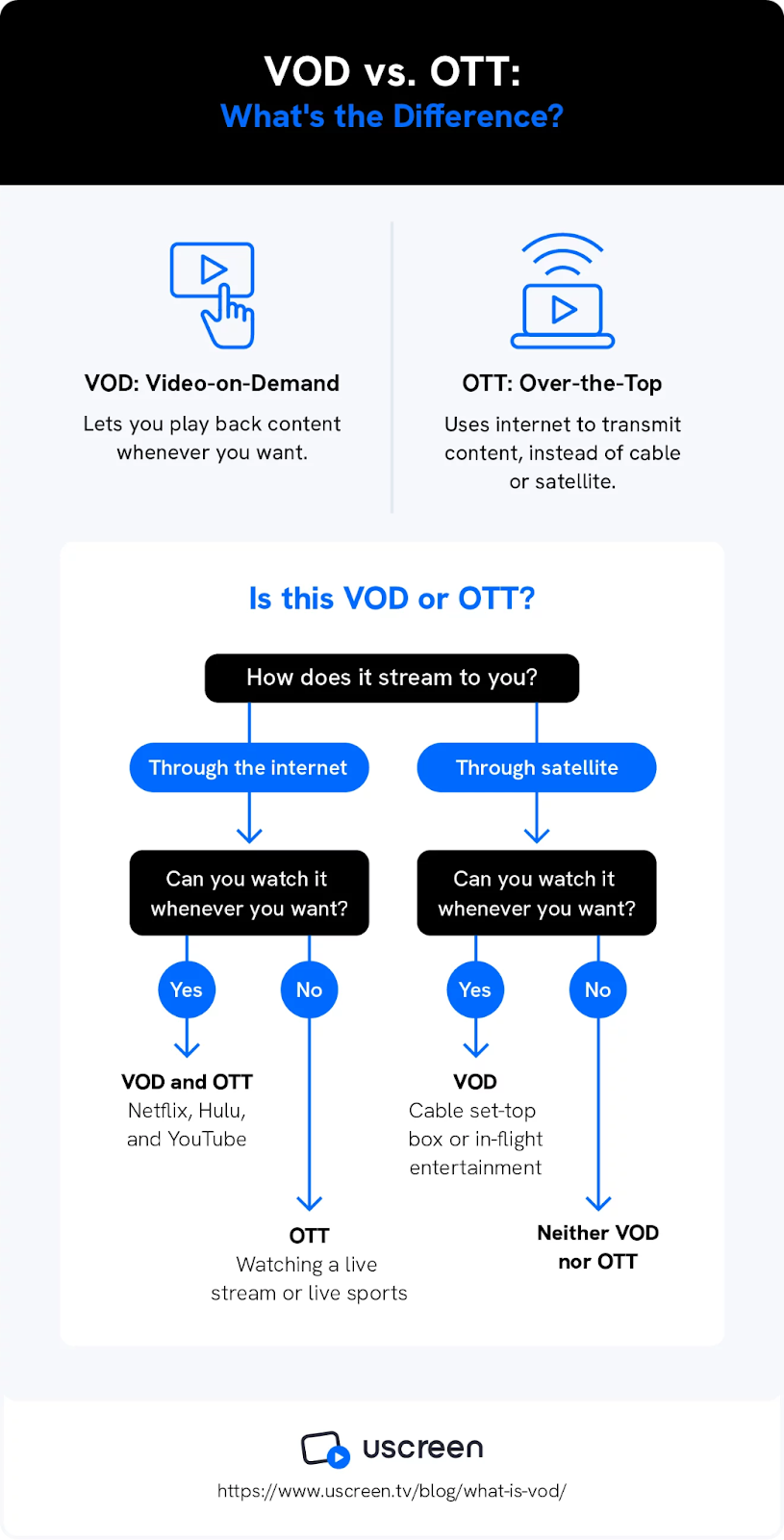
OTT applications deliver significant competitive advantages by enabling multi-format content distribution through a single channel. Your business can offer everything from premium pre-recorded videos to interactive live streams of events, conferences, and product reviews. By giving viewers the freedom to choose between real-time participation or on-demand viewing, you create a superior customer experience while maximizing engagement opportunities. This flexibility results in higher customer satisfaction and retention rates, directly improving your ROI.
Notably, live streams can be automatically converted to VOD format, creating an expanding content library that generates value long after the original broadcast. This will double the coverage and attract a wider audience.
Users can view live VOD content from their mobile devices and TVs through OTT applications. Even switching from one device to another, they can continue to watch their favorite videos on the same platform.
Leading businesses increasingly adopt OTT platforms because they combine powerful analytics, personalization engines, and flexible monetization options with unmatched accessibility and device compatibility. OTT has become the gold standard for companies serious about leveraging video content to drive growth, delivering measurable results across customer acquisition, engagement, and revenue metrics.
Tips for Starting a Successful VOD Business
Breaking into the VOD space isn’t easy. The market is crowded, but that doesn’t mean there isn’t room for your unique vision. Having helped multiple businesses navigate this landscape, we at Trembit have noticed three key strategies that separate the platforms that thrive from those that barely survive.
Build Your Content Library Before Launch Day
Before you launch your video-on-demand platform, you should already have a solid video content library. Books first, then bookcase. This is especially true for those who choose to use the subscription business model. If people don’t find enough content when they visit your site, they’re unlikely to be willing to invest their money in it. Yes, and the first impression will be spoiled.
The expert recommendation: Aim for at least 20-30 hours of quality content before going live.
Quality Content Is Your Only True Competitive Advantage
Fancy websites and slick marketing can only take a platform so far. Companies have poured millions into promotion only to wonder why nobody sticks around after the free trial.
The truth? Content is the product. Everything else is just packaging.
Today’s users have incredibly sophisticated taste – they can detect mediocre content immediately. They don’t just want good enough; they want content compelling enough to share with friends and family.
Here’s what actually works in 2025:
- Diversify thoughtfully
Don’t just create random variety. Create meaningful variety based on what your target audience actually wants. One of the platforms we built saw engagement triple after they stopped trying to please everyone and instead went deep into three specific niches they knew their audience loved.
- Consistent doesn’t mean boring
Successful VOD businesses release on predictable schedules while experimenting with formats. Users appreciate knowing when to expect new content but enjoy being surprised by creative variations.
- Originality matters more than budget
Netflix didn’t become Netflix by outspending competitors. They created shows no one else had the vision to make. A unique perspective serves as a competitive advantage – successful platforms lean into their distinctive content approach.
- Balance algorithms with human insight
AI-powered recommendations are powerful, but platforms seeing explosive growth in 2025 balance algorithms with human curation. Data reveals what people have watched; strategic intuition identifies what they might not know they want yet.
Start With a Solid Website, Then Expand to VOD Apps with Trembit
Industry experience reveals an often-overlooked truth: building custom apps immediately is frequently a resource drain for new VOD businesses.
Startups commonly deplete funding by creating apps with minimal downloads because they haven’t proven their content model. The strategic approach starts with a responsive website optimized for mobile browsers, and then expands to apps once a loyal audience exists.
White-label VOD solutions have evolved significantly – they’re no longer the generic-looking platforms of previous years. For a fraction of custom development costs, platforms can launch with professional features including:
- Customized branding with premium aesthetics
- Flexible monetization models that adapt as market fit become clear
- Sophisticated analytics identifying high-performing content deserving additional investment
At Trembit, we’ve built VOD platforms for media companies, educational institutions, and corporate clients since 2011. Our engineering team specializes in adaptive bitrate streaming, multi-device compatibility, and scalable architecture that supports growing audience bases. We’ve found that VOD projects require specific technical considerations beyond standard web applications—particularly regarding content protection, bandwidth optimization, and seamless playback across devices. These technical foundations determine whether a platform can reliably serve content to thousands of simultaneous users or crumble under increased traffic.
This approach concentrates resources where they matter most initially: creating exceptional content and building an audience. Once the concept proves viable, custom app development becomes a strategic investment rather than a speculative expense.
The VOD businesses that dominate aren’t necessarily those with the largest budgets. Success comes to platforms that deeply understand their specific audience’s desires and consistently deliver with a distinctive voice.
Conclusion
Video on Demand (VOD) is a mega-useful technology of the future, for many of which it is already here. Its benefits are applicable to both business and leisure episodes of our lives. Therefore, it will become more and more popular.
Whales like Netflix or Amazon are already doing well in the VOD industry, and it’s hard to overshadow them due to their size. However, there is always a chance to stand out, leaving them to rest in the background. There are effective strategies and actionable tips to help the local player grow and be in demand in the rapidly changing video entertainment industry.
One of the things you can do to make your VOD business successful is to use video-on-demand app development. By owning a customized powerful VOD platform, you can easily create personalized on-demand videos and start earning in no time.
Looking to enter the VOD market with a solution designed specifically for your content? Let’s discuss how Trembit can help you build a platform that stands out from the crowd.