Introduction
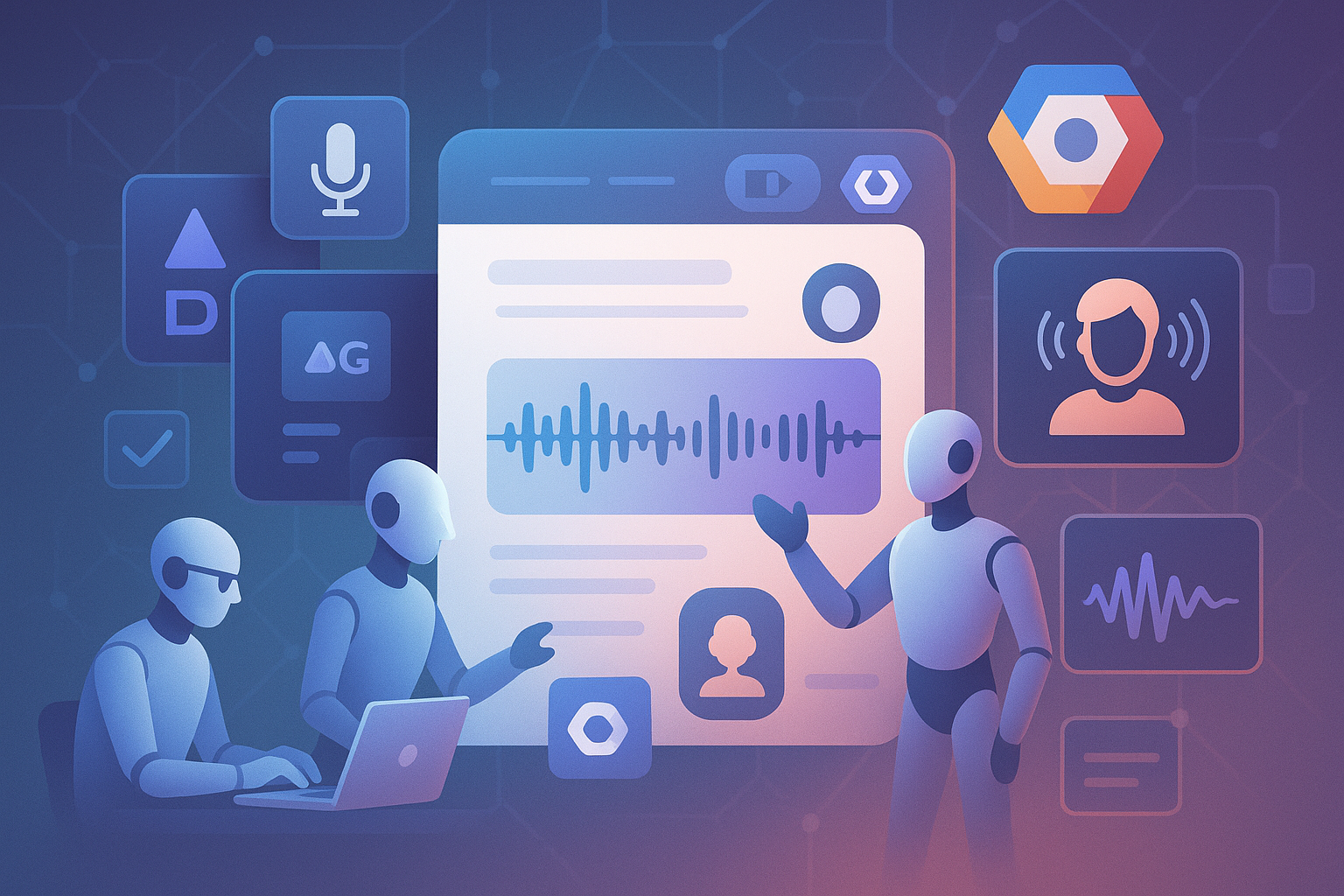
As voice interfaces and conversational AI become increasingly central to modern digital experiences, choosing the right speech technology provider is critical. This article compares leading platforms—ElevenLabs, Deepgram, Google Cloud, and Microsoft Azure—based on their real-time and on-demand capabilities for speech-to-text and text-to-speech, voice cloning features, and support for customizable AI assistants. This guide aims to help developers, product teams, and enterprise decision-makers select the most suitable tool for building scalable, natural, and intelligent voice-driven applications by highlighting the strengths, limitations, and ideal use cases of each solution.
The Rise of Voice and Speech AI
Voice and speech technologies have evolved from niche novelties into essential components of digital interaction in the last decade. From virtual assistants like Siri and Alexa to AI-powered customer service agents and transcription tools, the ability for machines to understand and produce human speech is reshaping how we work, learn, and communicate.
Several factors are driving this transformation:
- Advancements in Deep Learning: Neural networks and transformer-based models have significantly improved the accuracy and realism of both speech-to-text (STT) and text-to-speech (TTS) systems, enabling more natural interactions.
- Demand for Hands-Free Interfaces: As users interact with devices in cars, kitchens, hospitals, and warehouses, voice control has become a safer and more efficient interface.
- Multilingual Accessibility: Modern speech systems support dozens of languages, making global communication and localization easier.
- AI Integration: Combining LLMs (large language models) with voice interfaces has opened the door to truly conversational AI experiences—systems that don’t just transcribe or speak but understand and respond intelligently.
This shift is not limited to consumer applications. Enterprises are rapidly adopting voice technologies for automated call centers, real-time transcription in meetings, accessibility tools, and intelligent virtual agents. As these tools become more affordable, customizable, and accurate, organizations of all sizes are beginning to integrate speech AI into their workflows. The result? A world where voice is no longer just a feature—it’s becoming a fundamental interface.
Key Use Cases Across Industries
Voice and speech AI technologies are no longer confined to personal assistants or novelty applications—they are now deeply embedded in diverse industries, driving efficiency, accessibility, and user engagement. Below are some of the most impactful and growing use cases across sectors:
Healthcare
- Medical Transcription: Real-time speech-to-text tools streamline clinical documentation, reducing administrative burdens for doctors and nurses.
Example: Suki AI automates note-taking during patient consultations. - Virtual Health Assistants: AI-driven voice bots provide medication reminders, answer patient queries, and help with appointment scheduling.
Example: Babylon Health uses voice for triage and symptom checks. - Accessibility: TTS systems assist visually impaired patients in accessing digital content and instructions.
Example: Microsoft Azure TTS powers accessible content for NHS apps.
Customer Support
- Voice Bots & IVRs: Companies deploy intelligent voice agents to handle common customer queries, reduce wait times, and lower operational costs.
Example: Bank of America’s “Erica” voice assistant handles banking requests. - Multilingual Support: Real-time translation and transcription allow support centers to assist customers in multiple languages without hiring native speakers.
Example: Deepgram enables multilingual transcription for call centers. - Sentiment Analysis: Voice tone analysis helps agents assess customer frustration or satisfaction.
Example: Cogito provides real-time emotional coaching to support reps.
Retail & E-Commerce
- Voice Shopping: Consumers can search for products, place orders, and track deliveries via voice commands.
Example: Walmart Voice Order via Google Assistant. - Live Virtual Sales Assistants: Personalized voice agents provide recommendations and product guidance in real time.
Example: LiveBazaar integrates voice with live commerce streams. - Voice Branding: Custom TTS voices allow brands to establish consistent audio identities across platforms.
Example: Mercedes-Benz uses a branded TTS voice across its digital assistants.
Education & E-Learning
- Speech Feedback: Language learners receive real-time pronunciation and fluency assessments.
Example: Duolingo uses speech recognition to grade spoken responses. - Interactive Tutors: AI voice tutors deliver lessons, quizzes, and feedback in engaging, conversational formats.
Example: ELSA Speak provides spoken English coaching using STT. - Content Accessibility: TTS helps students with reading challenges or learning disabilities access course material.
Example: ReadSpeaker powers voice narration for Moodle courses.
Gaming & Entertainment
- Dynamic NPC Dialogue: Real-time TTS enables game characters to respond to players with AI-generated speech, increasing immersion.
Example: Replica Studios powers in-game AI character speech. - Voice-Controlled Gameplay: Players use natural language to control game actions or navigate interfaces.
Example: “Hey You, Pikachu!” pioneered voice input in gaming. - Localized Voiceovers: Fast, high-quality TTS helps localize games and media content efficiently.
Example: ElevenLabs supports multilingual voiceover generation for indie games.
Manufacturing & Logistics
- Voice-Guided Operations: Workers use voice interfaces for hands-free navigation of checklists and inventories.
Example: Honeywell’s Vocollect voice system guides warehouse staff. - Equipment Monitoring: Voice alerts and commands simplify machine interaction on noisy factory floors.
Example: Siemens integrates speech recognition for operator controls. - Training & Safety: Voice-driven simulations and real-time instruction improve safety and onboarding processes.
Example: VR training apps use TTS narration for safety procedures.
As voice AI becomes more refined and cost-effective, its adoption across industries continues to grow. The key differentiator now lies in selecting the right platform—one that matches technical, financial, and user experience requirements.
Evaluation Criteria
To choose the right speech and voice AI platform, start by identifying the most essential evaluation factors. The right platform depends on how well it aligns with your real-time needs, use cases, scalability goals, user experience expectations, and feature availability.
Real-Time vs On-Demand Capabilities
Real-Time Processing is essential for applications requiring immediate interaction, such as:
- Live virtual assistants
- Interactive voice response (IVR) systems
- Gaming and real-time education platforms
On-Demand Processing is better suited for:
- Transcribing recorded meetings, podcasts, or videos
- Generating voiceovers for pre-recorded content
- Processing large volumes of asynchronous customer feedback
When evaluating platforms, consider:
- Latency requirements (sub-second vs seconds)
- Streaming support vs batch input modes
- Scalability under load (e.g., number of concurrent calls or recordings processed)
Text-to-Speech (TTS) and Speech-to-Text (STT) Essentials
Both TTS and STT should be rated for:
- Accuracy: How well the platform transcribes diverse accents, jargon, and noisy environments.
- Naturalness: For TTS, how humanlike and expressive are the generated speech sounds?
- Language Support: Number of languages and dialects supported natively.
- Control: Customization options like pitch, speed, emotion, and SSML (Speech Synthesis Markup Language) support.
Voice Cloning and Custom Assistant Requirements
For brands and developers looking to create unique voice experiences, two advanced capabilities are becoming essential:
Voice Cloning
- Allows creation of a synthetic voice modeled after a natural human speaker.
- Useful for branded voice interfaces, media, and personalization.
- Evaluate licensing restrictions, required training data, and voice safety protocols.
Custom AI Assistants
- Enable the development of full conversational agents using speech interfaces combined with LLMs or APIs.
- Important features include:
- Prompt control and persona design
- Integration with external APIs and tools
- Memory/context management
- Interruption and turn-taking handling
- Developer SDKs and real-time deployment support
With these criteria in mind, let’s move on to an overview of the top platforms—ElevenLabs, Deepgram, Google Cloud, and Microsoft Azure—and how they measure up across these key dimensions.
Platform Overview
Let’s explore four top speech and voice AI providers, each with unique strengths in features, developer tools, and use cases. Whether you need real-time transcription or customizable voice assistants, these platforms support numerous business and technical needs.
ElevenLabs
ElevenLabs is a fast-growing innovator in voice synthesis, best known for its hyper-realistic, multilingual text-to-speech engine. Recently, it expanded into speech-to-text and Conversational AI, offering tools for building fully customizable voice agents with real-time interaction and natural turn-taking.
Notable for:
- Real-time TTS and STT with extremely natural voice quality
- Voice cloning and custom voice design
- AI assistant builder with integration to LLMs
- Over 30 languages supported for voice synthesis
Best for: Developers and brands building lifelike voice interfaces or branded AI assistants.
Deepgram
Deepgram is a speech-to-text platform focused on real-time, low-latency transcription. It recently introduced the Aura TTS engine, creating an end-to-end voice AI stack. Deepgram stands out for its speed, scalability, and developer-first tooling, making it a strong choice for dynamic, voice-driven applications.
Notable for:
- Real-time and batch STT with high accuracy
- On-device and cloud deployment flexibility
- TTS via Aura, though still developing
- Fast setup and rich SDK support
Best for: Startups and tech teams building scalable voice experiences requiring fast, accurate transcription
Google Cloud Speech
Google Cloud offers robust and mature APIs for speech-to-text and text-to-speech, including real-time and batch processing. It features WaveNet and Neural2 voices for highly realistic speech output, with SSML controls and strong language coverage.
Notable for:
- Broad language support (100+)
- Both streaming and batch support for STT and TTS
- Reliable for enterprise-scale applications
- No voice cloning or AI assistant platform out of the box
Best for: Enterprises needing dependable, scalable voice tools with strong global support.
Microsoft Azure Speech Services
Azure Speech offers one of the most comprehensive speech platforms, integrated into Microsoft’s ecosystem. It includes Neural TTS, Custom Neural Voice, real-time/batch STT, and the Bot Framework for building end-to-end conversational agents.
Notable for:
- Real-time and on-demand STT/TTS
- Voice cloning via Custom Neural Voice (with approval)
- Azure Bot Service for full assistant integration
- Enterprise-grade scalability and security
Best for: Enterprises or institutions needing tightly controlled, customizable, and compliant voice solutions.
With this foundational understanding, the next section will present a feature-by-feature comparison in a clear, concise table
Feature Comparison Table
This table compares ElevenLabs, Deepgram, Google Cloud, and Microsoft Azure across key features relevant to modern voice AI applications: real-time/on-demand support, voice synthesis quality, customization, and AI assistant readiness.
| Feature | ElevenLabs | Deepgram | Google Cloud | Microsoft Azure |
| STT Real-Time | ✅ Yes | ✅ Yes | ✅ Yes | ✅ Yes |
| STT On-Demand | ❌ No (not supported yet) | ✅ Yes | ✅ Yes | ✅ Yes |
| TTS Real-Time | ✅ Yes | ✅ Yes (Aura) | ✅ Yes | ✅ Yes |
| TTS On-Demand | ✅ Yes | ✅ Yes | ✅ Yes | ✅ Yes |
| Voice Cloning | ✅ Yes (Pro plan, fast access) | ❌ No | ❌ No | ✅ Yes (approval required) |
| AI Assistant Support | ✅ Built-in LLM + voice integration | ❌ Transcription only | ❌ Requires external tools | ✅ Bot Framework + Speech SDK |
| Best For | Natural voice assistants, narration bots | Developer-friendly STT workflows | Multilingual, global deployments | Enterprise-scale, secure voice customization |
Choosing the Right Voice AI Provider
ElevenLabs — Best for Voice Assistants
Why Choose It:
ElevenLabs offers highly realistic, emotionally expressive TTS, voice cloning, and tools for building AI voice agents. It’s especially strong in real-time experiences and branded voice interactions.
Use Cases:
- Branded assistants
- Audiobook narration
- eLearning voiceovers
- Game character voices
Deepgram — Best for Developer Flexibility
Why Choose It:
Designed for developers, Deepgram provides low-latency, accurate speech-to-text with flexible SDKs and the ability to deploy models in the cloud or on the edge. Ideal for real-time and embedded use.
Use Cases:
- Meeting transcription
- Voice-controlled apps
- Call analytics
- In-app voice search
Google Cloud — Best for Scalability & Language Support
Why Choose It:
Google Cloud supports over 100 languages with robust STT and TTS services. It’s reliable for both real-time and batch processing and integrates well within the Google ecosystem.
Use Cases:
- Global customer platforms
- Multilingual content tools
- Language learning apps
- Transcription services
Microsoft Azure — Best for Enterprise Customization
Why Choose It:
Azure delivers enterprise-grade voice tools, including secure voice cloning and the Azure Bot Framework. It’s built for compliance-heavy environments and scalable integrations.
Use Cases:
- Enterprise voice assistants
- Secure IVR systems
- Internal tools with voice control
- Multilingual enterprise apps
Pricing and Deployment Considerations
Pricing and deployment models vary significantly across voice AI platforms. Making the right choice depends on how you’ll use the service—whether it’s for real-time streaming, batch transcription, interactive voice assistants, or localized offline apps.
Cost Models (Per Minute / Per Character)
Most platforms follow two core pricing models:
- Speech-to-Text (STT): Charged per minute of audio transcribed.
- Text-to-Speech (TTS): Charged per character of text converted to speech.
| Platform | STT Pricing | TTS Pricing | Free Tier Example |
| ElevenLabs | ❌ Not yet supported | ✅ $0.30–$1.20 per 1M chars | 10,000 free characters/month |
| Deepgram | ✅ $1.50 per hour | ✅ ~$0.02 per 1,000 chars | 200 mins STT + 100,000 chars TTS/month |
| Google Cloud | ✅ ~$0.006 per 15 sec | ✅ $4.00 per 1M chars (WaveNet) | 60 mins STT + 4M chars TTS/month |
| Azure | ✅ ~$1.00–$1.60 per hour | ✅ $4.00–$16 per 1M chars | Limited quota/month depending on region |
Example:
A voice assistant reading 100 product descriptions of ~500 characters each (50,000 characters total):
- ElevenLabs: ~$0.50–$1.00 depending on voice type
- Google Cloud (WaveNet): ~$0.20
- Azure (Neural): ~$0.20–$0.80
For transcribing 1 hour of a podcast:
- Deepgram: $1.50
- Google Cloud: ~$1.44
- Azure: ~$1.60
Cloud vs On-Premises Options
Depending on industry requirements—like data sovereignty, low latency, or offline reliability—deployment model flexibility is crucial.
| Platform | Cloud Deployment | On-Premises / Edge Support | Example Use Case |
| ElevenLabs | ✅ Fully cloud | ❌ | SaaS-based education or podcast platforms |
| Deepgram | ✅ Yes | ✅ Yes (Docker, edge-ready) | Edge devices in hospitals or call centers |
| Google Cloud | ✅ Yes | ⚠️ Limited via Anthos | Transcription for global video platforms |
| Azure | ✅ Yes | ✅ Via Azure Stack | Government services with private networks |
Example:
- A healthcare startup needing voice notes transcribed on-site without internet would likely choose Deepgram on-prem or Azure with Azure Stack.
- A news outlet that turns many articles into audio each day might choose Google Cloud TTS for its wide language support and affordable pricing.
- A Ukrainian edtech company using ElevenLabs for real-time narration with cloned voices would benefit from its high-quality, expressive TTS—even without on-prem support.
Choosing the Right Fit
Recommendations for Startups vs Enterprises
Startups
Startups need agility, ease of integration, and cost transparency.
Recommended Platforms:
- ElevenLabs — Ideal for launching voice-enhanced MVPs or apps with branded assistants or narrators.
- Deepgram — Best for lightweight, developer-friendly speech recognition APIs.
Why:
- Clear, usage-based pricing
- Fast onboarding and simple APIs
- Ideal for lean development teams and product experiments
Example:
A mobile app startup in Ukraine building a language learning tool can use ElevenLabs for Ukrainian voice narration and Deepgram for voice input features.
Enterprises
Larger organizations require customization, compliance, scalability, and support.
Recommended Platforms:
- Azure — Comprehensive enterprise tools, hybrid deployment, strong privacy controls.
- Google Cloud — Scalable infrastructure and multilingual reach with global support.
Why:
- Enterprise SLAs and security
- Advanced tools like Speech Studio (Azure)
- Scalable global infrastructure
Example:
A telecom company serving Eastern Europe could deploy Azure STT + Custom Neural Voice for a secure, compliant virtual agent in Ukrainian, hosted within private infrastructure.
Conclusion Future of Speech AI
Speech AI is rapidly transforming how we interact with technology, making conversations with machines more natural, personalized, and accessible across languages. With growing support for real-time, on-device, and emotionally expressive voices, the future lies in seamless, multilingual, and human-like voice experiences embedded into every digital product.
At Trembit, we specialize in building advanced speech AI solutions—from real-time voice translation to expressive voice cloning—that power next-generation user experiences. If you’re looking to integrate smart, multilingual voice capabilities into your product, our team is here to help.