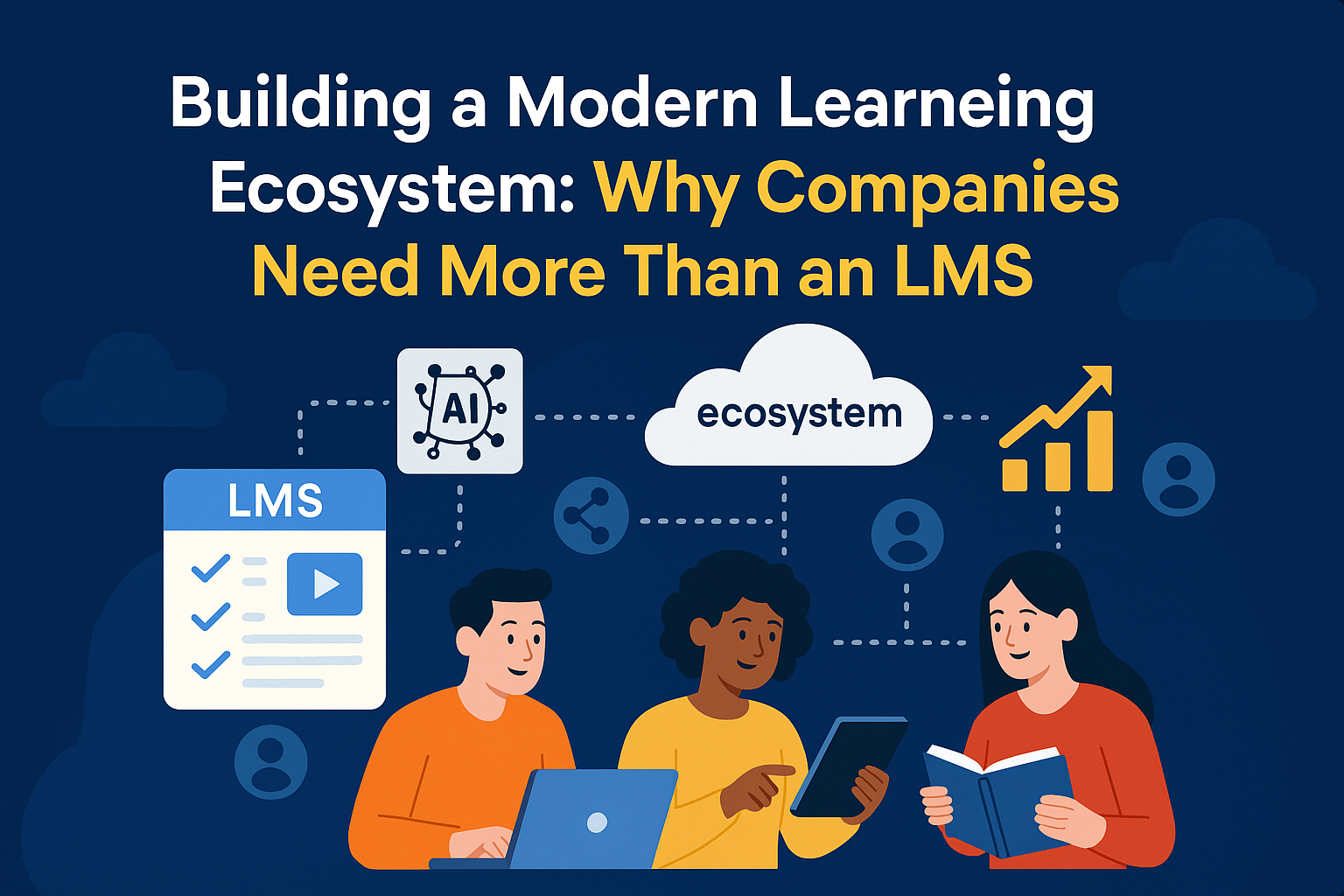
Modern companies are rapidly moving beyond traditional Learning Management Systems (LMS) toward comprehensive learning ecosystems that support continuous growth, innovation, and organizational agility. Unlike standalone platforms, a learning ecosystem integrates people, content, technology, and strategic processes to create a dynamic environment where learning is highly personalized, scalable, and aligned with long-term business goals. In an economy where skills must evolve faster than ever, this holistic approach has become essential for companies striving to remain competitive and future-ready.
Why Companies Need More Than an LMS
For many years, LMS platforms have served as the foundation for corporate learning, enabling companies to manage online courses and track learner progress. However, the rapid shift toward hybrid work, the rise of real-time collaboration tools, and the demand for continuous skills development have exposed significant limitations of relying solely on an LMS.
To begin with, LMS platforms were not originally designed to support instructor-led training (ILT) or virtual ILT at scale. Managing logistics, scheduling, and resource allocation for synchronous learning often requires the use of additional tools or manual processes. As companies embrace blended learning models, this gap becomes even more evident.
Moreover, LMS systems tend to create fragmented learning experiences. Without seamless integration with collaboration tools, HR systems, content repositories, or knowledge-sharing platforms, learners end up navigating multiple disconnected environments, which disrupts engagement and reduces the effectiveness of learning.
In addition, many LMS platforms offer only basic analytics. Organizations increasingly require advanced, data-driven insights that link learning outcomes to performance metrics and business results — capabilities most LMS solutions do not provide.
Finally, the traditional LMS model often lacks true personalization. Employees receive uniform content rather than adaptive learning paths tailored to their roles, preferences, or skill gaps, ultimately limiting their growth potential.
These limitations collectively signal the need for a more flexible, interconnected approach to corporate learning.
Benefits of a Modern Learning Ecosystem
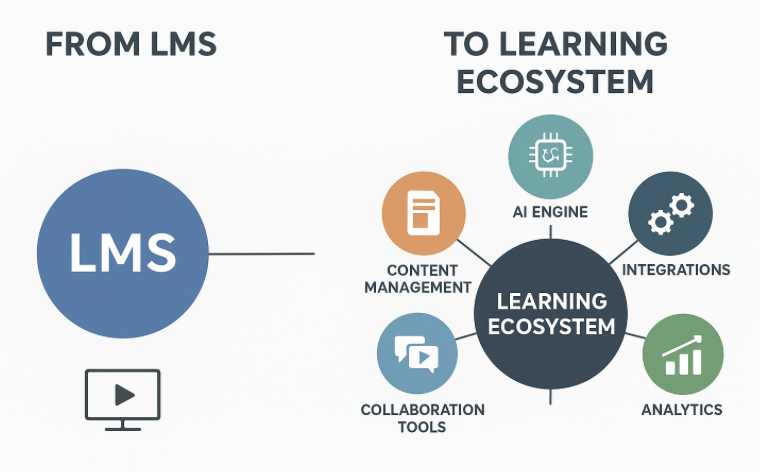
A learning ecosystem builds on the strengths of an LMS while addressing its constraints, offering a unified and transformative approach to learning and development. Instead of functioning as a standalone system, it acts as a network of integrated tools, platforms, and processes that together create a seamless learner experience.
One of the most significant advantages is the ability to deliver highly targeted and personalized learning experiences. Employees receive content recommended by AI based on their current skills and career goals, which in turn increases engagement and strengthens learning impact.
Another key benefit is promoting continuous skill development. Learning is integrated into daily workflows through microlearning, on-demand resources, and knowledge-sharing tools, enabling employees to continually upskill or reskill as business needs change.
Collaboration is also enhanced. Modern ecosystems integrate forums, group workspaces, video conferencing, and social learning platforms, promoting real-time collaboration and creating a culture of shared expertise.
Equally important, ecosystems provide data-driven insights. Through advanced analytics dashboards, organizations can measure the impact of learning on performance, track skill development trends, and identify areas for strategic improvement.
Finally, learning ecosystems support scalability and cost efficiency. Digital-first environments enable companies to train large, distributed teams without compromising quality.
Key Components of a Learning Ecosystem
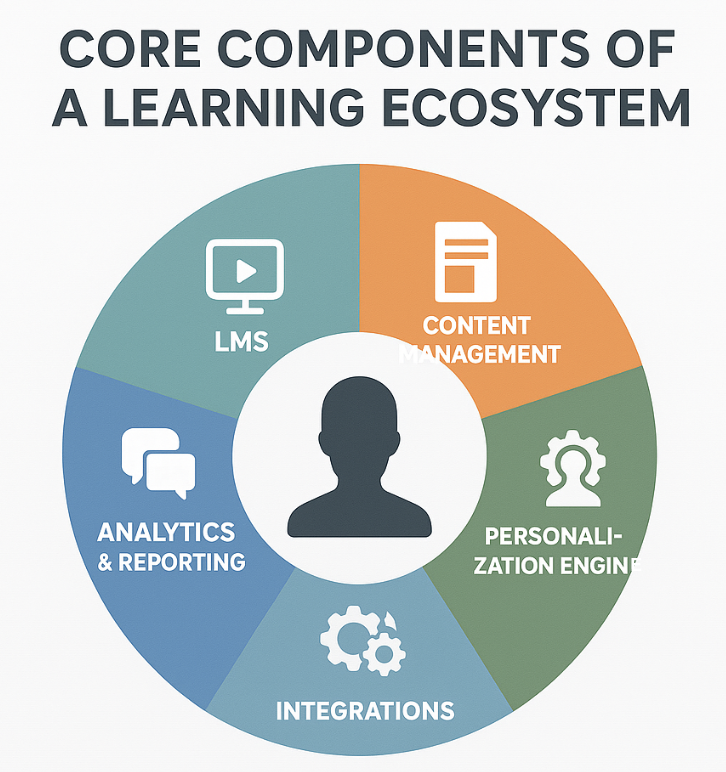
To function effectively, a learning ecosystem typically includes several interconnected components:
| Component | Description |
| Learning Management | Centralized platform for course delivery and tracking |
| Content Management | Repository for diverse learning materials (videos, articles, quizzes) |
| Collaboration Tools | Forums, chat, and social features for peer learning |
| Analytics & Reporting | Dashboards and reports for measuring learning impact |
| Integration Capabilities | APIs and connectors for seamless integration with HR, CRM, and other systems |
| Personalization Engine | AI-driven recommendations and adaptive learning paths |
Together, these components create an environment where learning is both structured and fluid, formal and informal, managed yet personalized.
How Trembit Supports Learning Ecosystems
For organizations seeking to build or enhance their learning ecosystem, partnering with an experienced technology provider is key. Trembit serves as a trusted partner with over 15 years of expertise and more than 200 successful projects, specializing in end-to-end development of modern e-learning platforms, video streaming solutions, and AI-driven learning tools.
By combining deep technical knowledge with a customer-centric approach, Trembit helps companies design and implement solutions tailored to their unique learning and business needs.
Trembit’s Expertise
Trembit offers a wide range of services essential for building a robust learning ecosystem:
- Custom e-learning platforms: Tailored solutions designed to integrate seamlessly with existing systems, ensuring smooth user experiences and operational efficiency.
- Video streaming and collaboration: Advanced WebRTC and video conferencing tools that support live sessions, virtual ILT, and asynchronous learning experiences.
- AI and adaptive learning: Machine learning algorithms that deliver personalized content and optimize learning paths.
- Dedicated teams and PMO: Flexible collaboration models, including dedicated development teams and full project management support for end-to-end delivery.
- Compliance and security: Systems built according to industry standards and regulatory requirements, ensuring safe and reliable learning environments.
Why Choose Trembit?
Partnering with Trembit brings clear strategic advantages:
- Proven track record: 15+ years of experience delivering solutions across industries, including education, healthcare, e-commerce, and enterprise platforms.
- Deep technical expertise: Specialization in video streaming, AI technologies, and e-learning architecture ensures high-quality, scalable solutions.
- Customer-centric delivery: Trembit’s collaboration models and communication approach are designed to adapt to each client’s goals and workflows.
- Commitment to innovation: Trembit continuously evolves its technological capabilities to stay ahead of market trends and bring cutting-edge solutions to clients.
Conclusion
As the pace of innovation accelerates, building a learning ecosystem is no longer just an option — it is a strategic necessity for modern organizations. Moving beyond traditional LMS platforms allows companies to create dynamic, scalable, and highly personalized learning environments that support continuous growth and improved performance.With its strong expertise in e-learning, video streaming, and AI-driven technologies, Trembit stands out as a reliable partner for designing and implementing learning ecosystems tailored to unique business needs. By embracing this holistic approach, companies can future-proof their workforce, strengthen engagement, and drive meaningful business success.