
AI Inside Live Video and Voice — Built at the Media-Path Level, Not Bolted On.
Running AI inside a live call — on frames flowing through your SFU, on audio measured in milliseconds of latency — makes the hard part the transport layer, not the model. Trembit builds real-time media AI: content moderation and analytics on live video, voice agents with barge-in, per-speaker captions and translation, and AI delivered over WebRTC data channels. Model-agnostic on top, protocol-deep underneath.
Trusted by Teams Building AI Into Live Video





Sound Familiar?
Adding AI to your live stream blew the latency budget.
The model works fine on a recorded clip. Then you put it in the live path and the round-trip — capture, encode, inference, deliver — pushed the call past the point where it feels real-time. Detection that’s accurate but 800ms late is useless for a conversation or a live moderation call.
You don't know where the inference should run.
On the client? On the SFU node? At the edge? In the cloud? Each choice trades latency against cost, GPU placement, and how much of the media you have to move. Get it wrong and you either burn money moving frames around or add delay you can’t take back — and most teams have no framework for deciding.
You need to moderate live user video in real time — and it's already streaming.
Recorded-video moderation is a solved, batch problem. Moderating live user video means pulling frames out of the media path, running detection, and acting — muting, blurring, cutting — inside the window before a viewer sees something they shouldn’t. That’s a media-path problem, not an API call.
Your voice agent feels laggy and can't handle interruption.
Users talk over it, and it keeps going — no barge-in, no turn-taking. The round-trip between speech-in and speech-out sits above the threshold where a conversation feels natural, because the pipeline was never tuned against a real WebRTC latency budget.
You need per-speaker captions or translation in a multiparty call.
A single mixed transcript is easy. Captions attributed to the right speaker — extracting each participant’s audio track from the SFU, transcribing per stream, and keeping timing aligned to the video — is a different job, and the generic STT vendors don’t do the per-speaker extraction for you.
You have AI output but no clean way to deliver it alongside the stream.
Bounding boxes, moderation flags, live transcripts, translation — they have to reach the client in sync with the video, without standing up a separate polling loop or a second socket that drifts out of time with the media. Delivering AI metadata alongside the stream is its own design problem.
AI in the Live Media Path Is a Different Problem
Anyone can send a recorded file to a vision or speech API and get a result back a second later. Live is a different discipline. Inference has to run against a latency budget measured in milliseconds, on media that’s already in motion through a media server, with the result delivered back in sync with the stream. That means deciding where inference runs (client / SFU node / edge / cloud), extracting frames or audio tracks from RTP, holding a latency contract between detection and action, and shipping results over the data channel. WebRTC AI isn’t an AI-modeling problem — it’s a real-time systems problem, solved at the transport layer. That’s the layer we own.
WebRTC AI Services
AI on Live Video
For products that need to see and act on video as it streams.
We build the pipeline that pulls frames out of the media path, runs the model, and acts inside the latency window — without turning your SFU into a bottleneck.
- Real-time content moderation on live user video — frame extraction from the SFU, detection, and act-in-the-window muting / blur / cut
- Real-time video analytics and auto-highlights for sports, commerce, and events — on the live feed, not a batch job
- Video enhancement in the stream — super-resolution, denoise, and virtual background
- Per-speaker live captions extracted from your SFU's audio tracks
Voice AI Agents on WebRTC
For teams putting a voice agent inside a call.
Where latency, barge-in, and turn-taking decide whether it feels like a conversation or a walkie-talkie. We tune the whole pipeline against a real WebRTC latency budget.
- Voice AI agents on WebRTC — latency budgeting, barge-in, and turn-taking tuned end to end
- OpenAI Realtime API on WebRTC — production integration, plus the HIPAA audio-BAA gap to know before healthcare
- Cascading (STT to LLM to TTS) vs. speech-to-speech architectures, and the cost of running a voice AI platform
- Full conversational-AI and voice-assistant product work
Real-Time Captions & Translation
For multiparty calls that need live STT, per-speaker attribution, or S2S translation.
The real-time audio-AI work that anchors our healthcare proof — per-speaker, aligned to the video, grounded in the session.
- Live speech-to-text in the media path — the shape of an active engagement we're building now
- Per-speaker captions: extracting each participant's audio track from the SFU, transcribing per stream, keeping timing aligned
- Real-time speech-to-speech translation, and choosing STT-relay vs. S2S architecture
AI Output Delivery & Integration
For any of the above — the connective tissue.
We deliver AI metadata (boxes, flags, transcripts, translations) alongside the stream, and we make the call on where inference runs so the architecture holds under load.
- WebRTC data channels for AI metadata — delivering results in sync with the media, no second polling loop
- Where-inference-runs architecture: client vs. SFU node vs. edge vs. cloud, matched to your latency and cost profile
- Integration with the rest of your AI estate; non-real-time AI hands off to the applied-AI practice
Need AI That Isn't in the Live Media Path?
Applied AI is a sibling discipline
Agents, orchestration, RAG over your documents, ML pipelines, AI wired into your ERP or EHR — that’s applied AI, built on systems and data engineering rather than protocol-level WebRTC depth. This page covers only AI inside live video and voice — the media-path work. Most real products need some of each, and we build both.
Where AI Runs in the Live Media Path
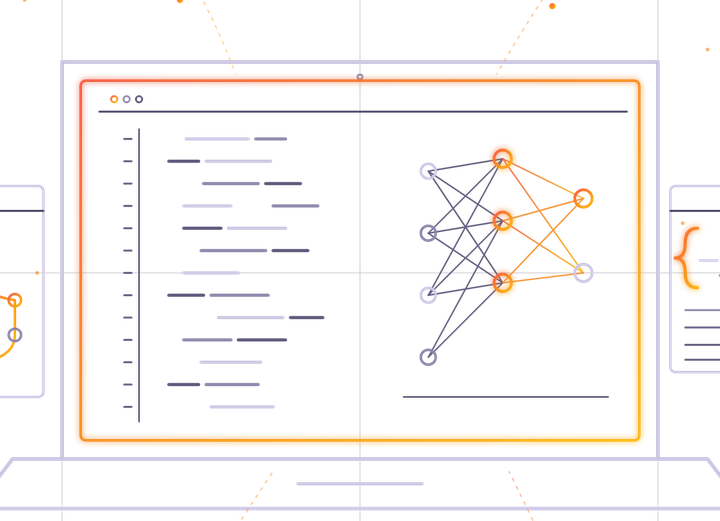
On the Client
Inference runs in the browser or app, on the local stream, before anything is sent. Lowest added latency and no media leaves the device — a privacy win for regulated use cases — but you’re bounded by the client’s CPU/GPU and can only see that participant’s own media. Good for virtual background, on-device denoise, or a first-pass filter.
On the SFU Node
Inference runs server-side, next to the media server, on tracks the SFU is already forwarding. This is where most live moderation and analytics belong: you extract frames or audio from RTP where the media already lives, instead of shipping streams to a separate service. The cost is GPU next to your media plane and careful capacity planning — see our SFU comparison.
At the Edge
Inference runs at a regional edge node between client and core — useful when you need lower latency than a central cloud but more capacity than the client, or when data residency dictates where frames may be processed.
In the Cloud
Inference runs in a central GPU service or a hosted model API. The most flexible and easiest to scale model-side, but every frame or audio chunk pays the network round-trip — exactly the latency you can’t afford in a tight conversational or moderation loop.
What Decides the Design (It's the Transport Layer)
Frame & Track Extraction from RTP
Getting clean frames — or a single participant’s audio track — out of the media path at the SFU, at the right cadence, without disrupting forwarding, is the unglamorous work that makes real-time AI possible. Sample too aggressively and you burn GPU; too sparsely and you miss the event.
The Latency Contract Between Detection & Action
For a live moderation call, detection is worthless unless the act — mute, blur, cut — lands inside the window before a viewer sees the frame. We design the pipeline around that contract, not around the model’s raw inference time.
Delivering Results Over the Data Channel
The AI output has to reach the client in sync with the media. WebRTC data channels carry that metadata alongside the stream — no separate polling loop, no second socket drifting out of time with the video.
How We Engage
Technical Scoping Call (30 min)
A Trembit real-time AI engineer looks at what you’re building, your media architecture, and your latency and cost targets — then tells you honestly whether the AI belongs in the live path at all, and what real-time actually requires. No pitch deck, just a diagnosis.
Architecture: Where Inference Runs (Weeks 1–2)
Before we build, we decide the thing that defines the system: client vs. SFU node vs. edge vs. cloud, how we extract frames or audio from the media path, and the latency contract between detection and action. You get an architecture you can commit to — latency and cost profile proven, not assumed.
Build in Sprints
We work in 2-week sprints with working software on a staging environment after every cycle. We ship a thin end-to-end slice early — media in, inference, result delivered over the data channel — so the real-time behavior is validated before we scale it.
Monitor Latency, Quality & Cost
In production we track the numbers that matter for real-time AI: added latency in the media path, detection quality, and GPU/inference spend per concurrent stream — with alerting so the system stays fast, accurate, and affordable as usage grows.
Ongoing Partnership
Most clients extend into an ongoing dedicated team (1–3+ years) for continued real-time AI feature development on a now-stable media platform.
Industries We Serve
Healthcare & Telemedicine
Real-time audio AI in the clinical media path — language detection and routing, live speech-to-text, and AI woven into compliant video care, built to survive HIPAA, GDPR, and KBV review. We engineered the automatic spoken-language detection behind Martti / Equiti Health, running at national scale. Explore telemedicine platforms and clinical AI.
Live Commerce & Streaming
Real-time analytics, auto-highlights, and moderation on live shopping and streaming feeds — detection on the live stream, not a post-processing batch. This is the video+AI territory where our live-stream-shopping and moderation content already ranks.
Events & Sports
Auto-highlights, real-time analytics, and per-speaker captions for live events and sports broadcasts — AI that keeps up with an unpredictable live audience and delivers output in sync with the feed.
Education & E-Learning
Live captions, real-time translation, and speech-and-language AI layered onto virtual classrooms and live sessions — per-speaker, aligned to the video, and grounded in the session rather than the open web.
Technology & Expertise
Model-agnostic on top, protocol-deep underneath — the real-time stack that makes AI work inside a live WebRTC stream.
WebRTC & Media
Speech (STT / LLM / TTS)
Computer Vision & Moderation
Video Enhancement
Backends
Compute
Cloud & Infrastructure
Real-Time AI Work We've Delivered
Real systems in the live media path — not slideware.
Automatic Language Detection in the Live Clinical Path
Martti / Equiti Health Healthcare
Challenge: A WebRTC medical-interpretation platform with automatic spoken-language detection across 250+ audio languages — recognizing the patient's language from sound, routing them to an available human interpreter, and establishing clinical-quality WebRTC video in under 20 seconds. HIPAA-compliant, running at 99.99% uptime across 4,000+ hospitals. To be precise: Martti pairs automatic language detection with human interpreters — it is not an AI clinical scribe and does not transcribe the consultation.
- Automatic spoken-language detection across 250+ audio languages
- Routes to a human interpreter — not a scribe, no consult transcription
- Clinical-quality WebRTC video in under 20 seconds
- HIPAA-compliant, 99.99% uptime across 4,000+ hospitals
Real-Time Speech-to-Text in the Media Path
Active Engagement (Anonymized) Under NDA
Challenge: We're currently building real-time speech recognition / speech-to-text in the live media path for a client — hands-on, in-production ASR work in exactly the transport-layer setting this page describes. Referenced anonymized by agreement; details available under NDA on a scoping call.
- In-production real-time ASR in the live media path
- Transport-layer speech-to-text, not a batch job
- Details under NDA on a scoping call
What Our Clients Say
“Trembit has deep expertise and experience in WebRTC and Tokbox. They know the inner workings of the tech and were able to inherit our semi-functional code and get it to work where multiple prior teams couldn’t. It was a tough project and yet they breezed through it — we’d highly recommend them to anyone looking to build video tech.
“What really sets Trembit apart is that they get the unique security needs in healthcare — that’s huge for us. They feel like a real part of our team, not just an outside contractor, and they deliver solutions that work well and are easy to use.
“Their proactive team gets things done as if it were their own project, consistently delivering high-quality outputs. Trembit’s handy suggestions, adaptability, and customer-oriented approach stand out — but what really differentiates them is their ability to deeply understand business needs.
Why Choose Trembit for WebRTC AI
-
15+ Years at the transport layer
Transport-layer depth few AI teams can offer
Most AI shops live at the model and API layer. We live below it — in the SFU, in RTP, in the latency budget, on the data channel. When the hard part is where inference runs and how the result gets back in sync with the stream, that’s exactly the layer we’ve worked in for 15+ years. Model-agnostic on top; protocol-deep underneath.
-
Inside The live call, not a demo
Real-time reliability engineering, not demos
We’ve spent 15+ years building systems where latency and concurrency are non-negotiable — the same discipline live AI demands. That’s why we can put inference inside a call and keep it feeling real-time, not ship a proof of concept that works on one recorded clip.
-
4,000+ Hospitals, HIPAA-shipped
A compliance moat rare in real-time AI
Real-time audio AI in a HIPAA setting — across 4,000+ hospitals — is not a slide, it’s something we’ve shipped. Encryption, data residency, and where-frames-may-be-processed are architected in, not retrofitted: the difference between a healthcare pilot and a system you can put in front of regulators.
-
~50 WebRTC-only firms globally
Exclusively WebRTC since 2009
Real-time communication has been our core since 2009. We don’t context-switch between WebRTC and unrelated work — it’s all we do, which is why the media-path angle other teams treat as an afterthought is where we start.
Frequently Asked Questions
Let’s Put AI Inside Your Live Video or Voice
Tell us what you’re building — live moderation or analytics, a voice agent in your calls, per-speaker captions or translation, or AI output delivered alongside your stream. We’ll set up a technical scoping call within 24 hours and give you an honest read on whether the AI belongs in the live path and where the inference should run.