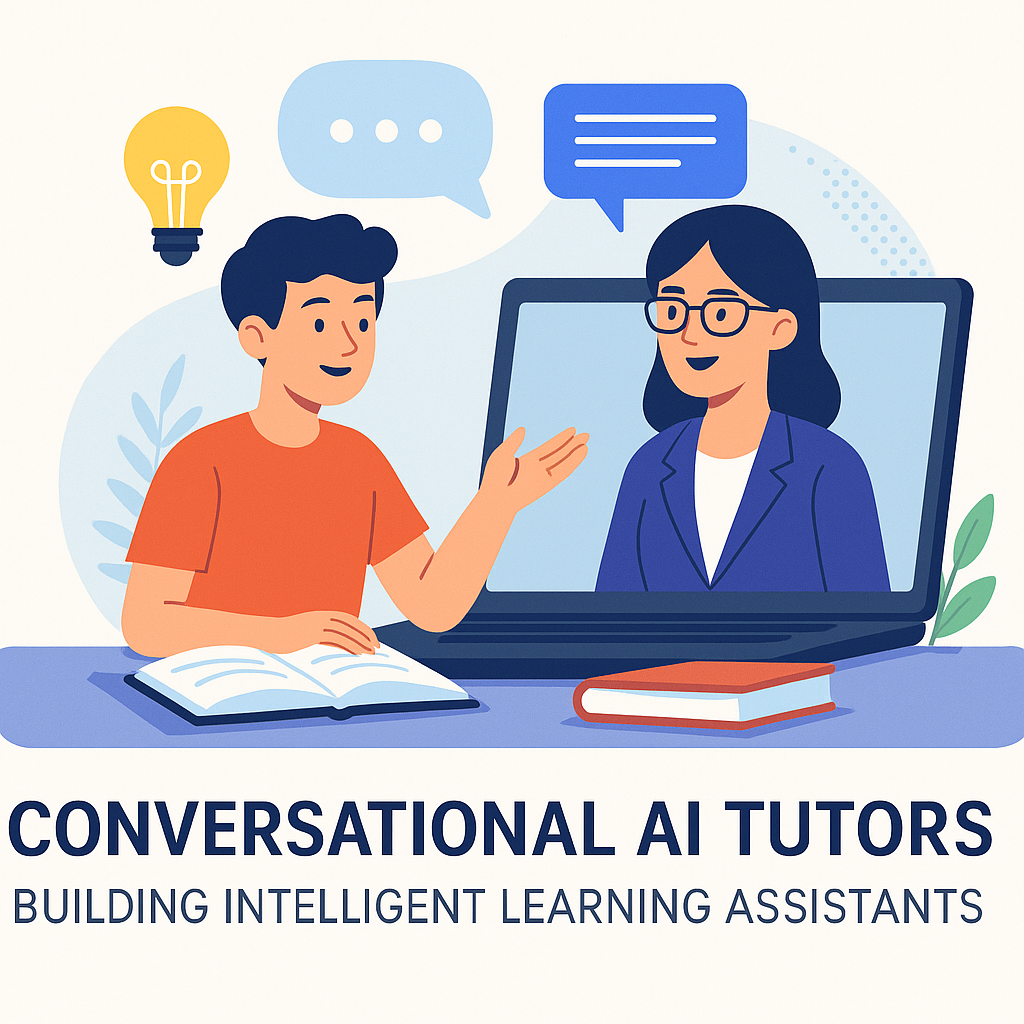
Conversational AI tutors — intelligent, chat-based learning assistants powered by advanced language models — are redefining modern education. They enable interactive, personalized, and adaptive learning experiences, acting as virtual mentors that teach, guide, and motivate learners while filling the gaps traditional e-learning often leaves behind.
This article explores how these systems work, their effectiveness, use cases, and the role of Trembit in developing robust AI-driven tutoring solutions.
What Are Conversational AI Tutors?
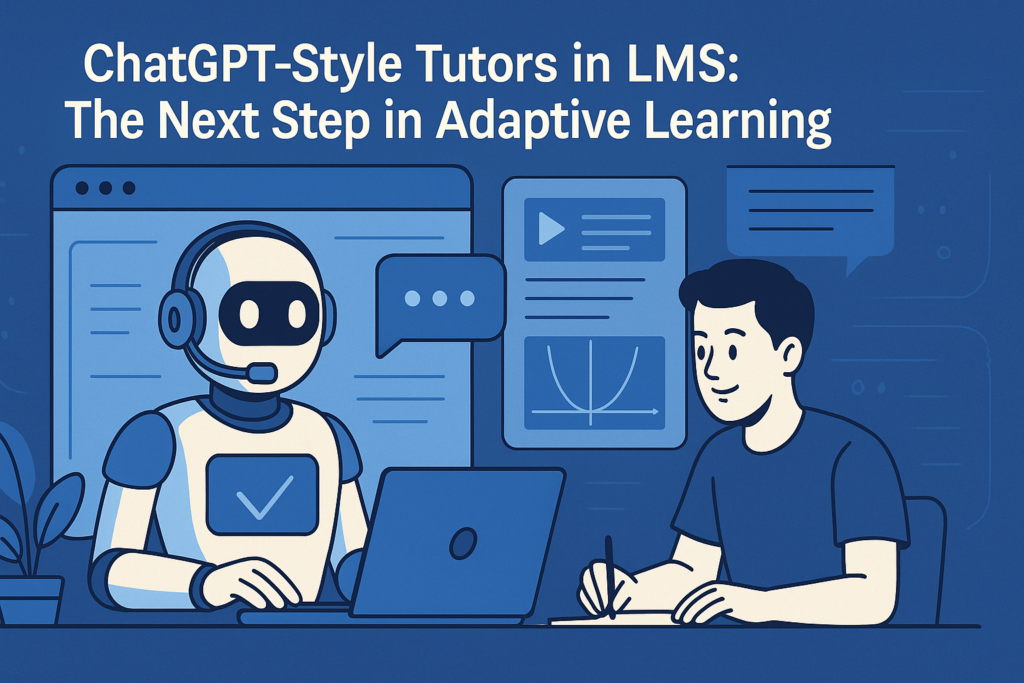
Conversational AI tutors are AI-powered systems that use natural language processing (NLP) and machine learning to engage learners through two-way dialogue.
Rather than simply delivering pre-recorded lessons, these intelligent assistants interact dynamically — explaining concepts, checking understanding, and providing encouragement through text or voice interfaces.
They can:
- Simplify complex ideas and adapt explanations to learner needs
- Offer contextual hints and guide problem-solving
- Track progress and deliver instant feedback
- Adjust difficulty levels in real time
- Motivate and engage students through positive reinforcement
In essence, they function as personalized virtual mentors available anytime, anywhere.
Research Insights and Effectiveness
Studies increasingly highlight the effectiveness of conversational AI tutors in improving engagement and learning outcomes.
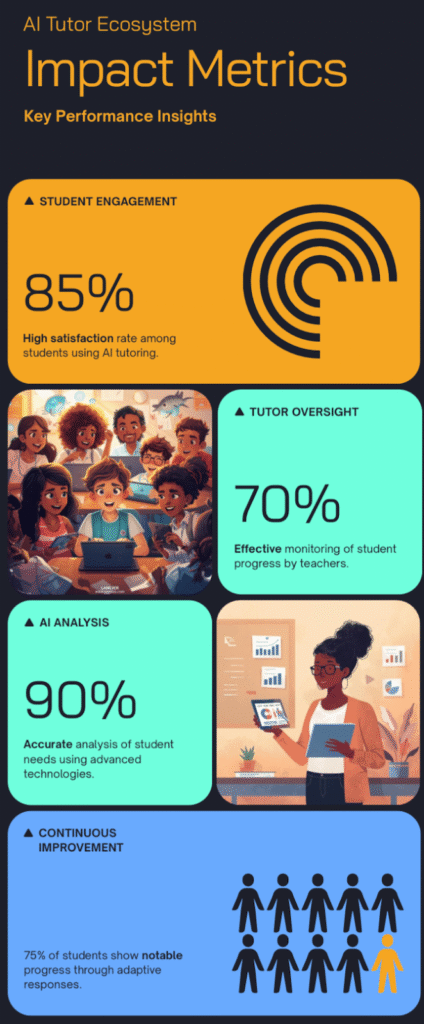
A 2025 Nature Scientific Reports study showed that students using these intelligent tutors learned faster and retained more knowledge than those in traditional classroom or static e-learning settings.
For instance, language-learning assistants enhance fluency by offering tailored feedback, adaptive exercises, and pronunciation practice.
However, researchers emphasize that successful implementation requires a balance between AI automation and human oversight, ensuring accessibility, privacy, and cultural relevance.
Key takeaway: The most effective systems integrate AI-driven personalization with human educators’ emotional and contextual understanding.
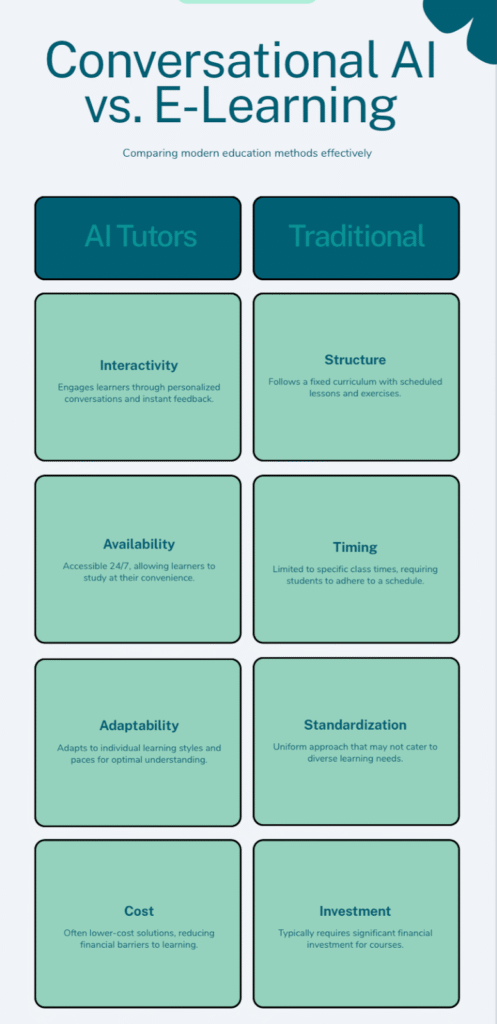
Conversational AI Tutors vs Traditional E-Learning
| Feature | Traditional E-Learning | Conversational AI Tutors |
| Interaction | One-way content delivery | Adaptive, two-way dialogue |
| Content Pacing | Fixed, scheduled | Dynamic and personalized |
| Availability | Limited to course times | 24/7, device-independent |
| Engagement | Passive (videos, reading) | Active, continuous interaction |
| Personalization | Generic modules | Adaptive learning paths and tailored support |
| Motivation & Feedback | Limited or delayed | Instant, data-informed feedback and motivation |
This shift marks a move from static learning environments to living, adaptive systems that evolve with each learner.
Use Cases of Conversational AI Tutors
These intelligent learning assistants are already reshaping multiple educational domains:
- K–12 Education: Homework help, quiz preparation, and progress tracking
- Higher Education: Research guidance, thesis support, and exam coaching
- Language Learning: Real-time conversation practice and fluency correction
- Corporate Training: Scenario-based skill development and certification preparation
- Accessibility: Read-aloud support, visual prompts, and inclusive learning tools
By delivering on-demand, adaptive support, AI tutors empower learners while enabling teachers to focus on higher-level mentoring and creativity coaching.
Designing Motivational AI Tutors
To be effective, conversational tutors must go beyond technical accuracy — they need to connect emotionally and sustain motivation.
Research identifies several key design principles:
- Multimodal Interaction: Combine text, voice, visuals, and video for a richer experience.
- Positive Reinforcement: Provide encouragement and celebrate progress.
- Learner Autonomy: Allow goal-setting and personalized content exploration.
- Empathy and Tone: Use emotionally intelligent language to build trust and persistence.
Such design strategies make AI tutors more human-like in their responsiveness and more effective in promoting long-term learning engagement.
Trembit’s Role in Advancing Conversational AI Learning
Trembit, a software development company specializing in AI, real-time video, and voice solutions, helps educational platforms and enterprises bring intelligent tutoring systems to life.
With over a decade of experience in speech processing, WebRTC communication, and cloud-native engineering, Trembit develops customized AI learning assistants that integrate seamlessly into e-learning ecosystems.
Trembit’s solutions include:
- Conversational learning systems powered by large language models (LLMs)
- Speech recognition and emotion detection for adaptive dialogue
- Scalable cloud infrastructure for real-time, high-performance communication
- Consulting and architectural design for AI-driven educational platforms
By combining strong engineering foundations with modern AI capabilities, Trembit empowers clients to create next-generation educational experiences that are secure, scalable, and learner-centered.
Conclusion
Conversational AI tutors — or intelligent learning assistants — represent the next step in personalized, scalable education.
They enable real-time dialogue, adaptive feedback, and emotional awareness, transforming passive online courses into dynamic learning journeys.
With expertise from Trembit in AI, video, and voice integration, educational institutions and companies can confidently build platforms that teach, guide, and motivate students — while preparing for the future of intelligent, human-centered learning.